FR
British Stage Designer and Director Pamela Howard Dies
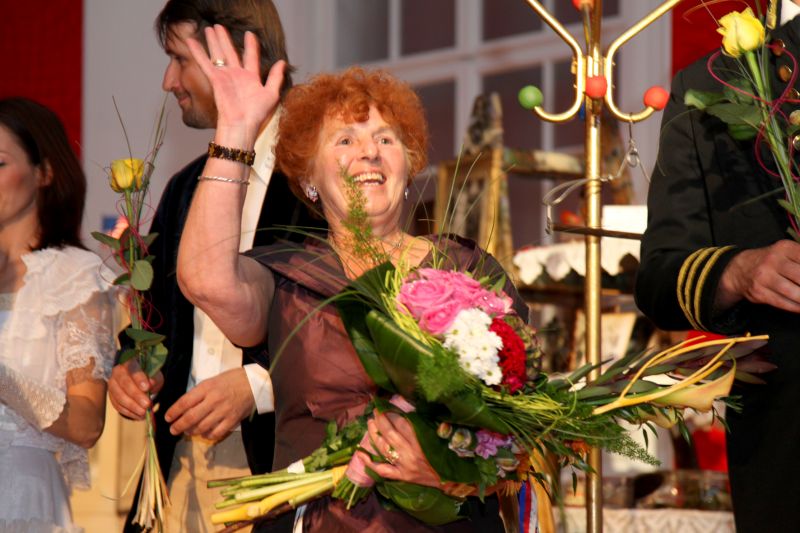 It is with deep sadness that we received the news that Pamela Howard OBE (1939–2026), the internationally acclaimed British stage designer, director, visual artist, educator and author, died on 26 October 2026 at the age of 87. Throughout her life, her work was also closely associated with Czech music and theatre.
Over the course of her distinguished career, she designed more than two hundred productions and collaborated with leading theatres in Britain and abroad. Her seminal book What Is Scenography?, translated into seven languages, influenced several generations of theatre designers and helped establish scenography as an independent art form, bringing together space, text, visual art, performers and audiences. In 2008, she was appointed an Officer of the Order of the British Empire for her services to drama.
Czech culture held a special place in her life. Her affinity with it began in her youth, when, at the age of sixteen, she heard Janáček’s Sinfonietta on the radio and travelled alone to Amsterdam to hear it performed live. Many years later, she directed and designed Janáček’s The Excursions of Mr Brouček at the National Theatre Brno. She also collaborated with Czech artists on a number of other projects, and in November 2025 she was awarded an honorary doctorate by the Janáček Academy of Performing Arts in Brno.
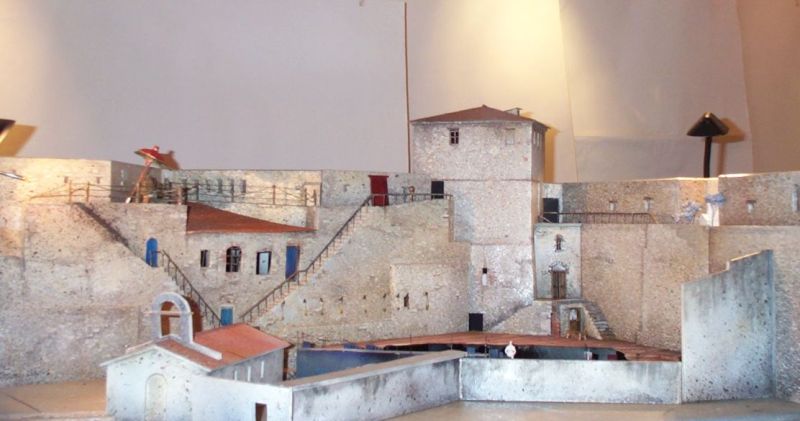
The music of Bohuslav Martinů formed an important part of her engagement with Czech culture. After encountering his work, she studied both versions of the opera The Greek Passion in detail and in 2005 staged its Greek premiere at the Byzantine fortress of Heptapyrgion in Thessaloniki. She chose the first, so-called London version of the opera, creating a powerful production firmly rooted in its authentic Greek setting.
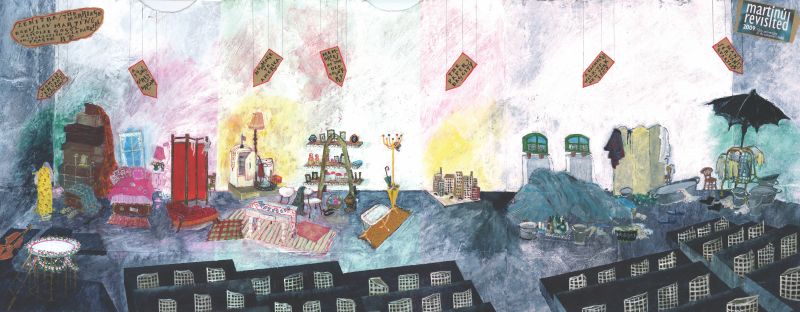
Howard returned to Martinů’s music in Brno. In 2009, she directed and designed both the sets and costumes for the composer’s comic opera The Marriage, produced by the National Theatre Brno and the Moravian Autumn Festival. She relocated Gogol’s story to the milieu of Russian émigrés in New York in 1953, a world with which Martinů himself would have been familiar. Staged in the intimate surroundings of the Reduta Theatre’s Mozart Hall, the unconventional production blurred the boundary between stage and auditorium. Through an imaginative use of found and recycled objects, Howard transformed the entire space into a vibrant theatrical installation. The production was later revived and presented again in Brno as well as on tour.
Pamela Howard understood scenography as the art of telling human stories through space, image and music. She devoted particular attention to the experiences of homeless people, refugees and those forced to leave their native countries. The humanist message of The Greek Passion, together with the experience of exile that permeates many of Martinů’s works, therefore resonated deeply with her.
We remember Pamela Howard with gratitude for her lifelong work, her inspiring and distinctive productions, and her extraordinary dedication to Czech music. Her work introduced the music of Bohuslav Martinů to new audiences and helped connect Czech culture with the international world of theatre.